


Bollywood:
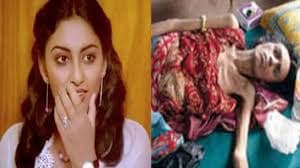
Cinema has always celebrated success, but it has rarely known how to respond to decline. The story of actress Nisha Noor, once a familiar face in South Indian cinema of the 1980s, is a sobering reminder of how quickly visibility can fade and how unforgiving the industry can be to those who fall out of its frame.
At her peak, Nisha Noor was part of an era when regional cinema was expanding rapidly, producing stars whose appeal cut across linguistic boundaries. She worked in Tamil, Malayalam, Kannada, and Telugu films, often alongside leading actors of the time. Performances in films such as Tick Tick Tick with Kamal Haasan and Sri Raghavendra with Rajinikanth brought her both recognition and commercial success. For a brief but significant period, she was a dependable presence in mainstream cinema.
Yet, like many actresses of her generation, her career was vulnerable to forces beyond her control. By the late 1980s, changing audience preferences and the constant churn of new faces reduced the number of roles available to her. By 1990, work had slowed considerably. What followed was not merely professional stagnation, but a deeper social and economic isolation.
The Indian film industry, for all its scale and influence, has historically lacked structured welfare systems for its artists. When careers falter, support often depends on personal networks rather than institutional safeguards. In Nisha Noor’s case, those networks appear to have failed her. Accounts from later years suggest that she faced acute financial distress, with little assistance forthcoming from the industry she had served.
It was during this period of vulnerability that she was allegedly exploited by individuals who promised help. Instead of rehabilitation or financial security, she was drawn into circumstances from which escape became nearly impossible. Her disappearance from public life went largely unnoticed, reflecting how easily former stars can slip into invisibility.
In 2007, she was found in a critically weakened state near a dargah, unrecognisable from the actor audiences once knew. An NGO stepped in to provide medical care, and doctors diagnosed her with HIV/AIDS. Years of neglect, trauma, and ill health had taken their toll. She died later that year.
Nisha Noor’s life and death raise uncomfortable questions about responsibility noton ly of an industry, but of a society that celebrates artists during their moment of success and turns away when that success fades. Her story is not an isolated one. Similar trajectories can be traced across decades, particularly among women performers whose careers are often shorter and more precarious.
In recent years, conversations around mental health, financial security, and post-career welfare for artists have gained visibility. Industry bodies and governments have acknowledged the need for pensions, healthcare access, and institutional support. However, stories like Nisha Noor’s underscore the consequences of delayed action.
Remembering her today is not merely an act of nostalgia. It is an opportunity to reflect on the structures that govern creative labour nd the moral imperative to ensure that those who contribute to cultural memory are not themselves erased when the spotlight moves on.