


Telangana:
Stagnant water is not only unhealthy, it is dangerous. Any political party that wants to survive through all seasons must be like flowing water, not stagnant. In Telangana, the Bharat Rashtra Samithi (BRS), which the people mandated two years ago to play the role of an active opposition, is failing to live up to those expectations. Instead of growing stronger day by day as an opposition, the party’s organisational hollowness is becoming evident as it slips from one decline to another.
At the grassroots, party workers and leaders are struggling merely to assert their existence in the ongoing gram panchayat elections. What is visible is not leadership-driven direction or strategy, but a survival instinct. After the defeat in the 2023 Assembly elections, the ‘zero’ in the 2024 Lok Sabha elections, and the loss of even the Secunderabad Cantonment and Jubilee Hills Assembly by-elections that were in hand, the BRS has faded further.
Unless there is a clear organisational strengthening mindset and concrete action, further weakening is inevitable. This situation may help the BJP expand in the state on one side, and enable the ruling Congress to prevent public dissatisfaction from turning against it on the other. For the BRS, however, it is a net loss.
If it is willing to learn, the present panchayat elections offer an important lesson to the BRS leadership. The sarpanch election results clearly show that at the village level, BRS has given stiff competition to the ruling Congress whether due to the self-political survival instincts of grassroots leaders, village-level bipolar politics, or other strong local reasons. Party cadres insist this was not because of leadership brilliance. In fact, they believe much more could have been achieved, but they were forced to settle for limited gains.
Even two years after losing power, the party has not recovered or stood up to the expected level. There is widespread inertia within the party. There has not been a single statewide programme that has mobilised people. While the party survives in social media and traditional media, it is fading day by day in the public arena disturbing its own ranks.
Party president K. Chandrashekar Rao (KCR) is confined to his farmhouse, while other key leaders operate from their villas, complain party insiders. District committees and frontal organisations were dissolved, but have not been reconstituted. As a result, all decisions are centralised. Even to hold a press conference on a key issue, approval from the top is required. Like the Bahujan Samaj Party in North India, the party still functions as an “MLA-centric” organisation.
Even after two years, the BRS legislature party executive has not been constituted. When representatives attend meetings such as the Business Advisory Committee, they are mocked by ruling party members asking, “In what capacity are you attending?” Grassroots workers toil to get MLAs and MPs elected, but when local body elections where leadership roles could come to them arrive, senior leaders show little interest. This double standard deeply hurts the cadre.
Warnings Ignored Early…
During the movement phase, people tolerated impatience and fatigue. But once the party became a “pure political party,” public neglect was no longer forgivable. When people are in distress, mere statements without direct action in the field do not appeal especially from an opposition party. Reducing opposition politics to “three press conferences and six tweets” is a grave miscalculation.
The BRS decline did not begin only with the 2023 Assembly results. The warning signs were visible much earlier. After the 2018 Assembly elections, within six months, the party’s vote share dropped by around five percent in the 2019 Lok Sabha elections. MP seats declined. Strongholds like Karimnagar, Adilabad and Nizamabad in North Telangana went to the BJP. Even KCR’s daughter Kavitha lost in Nizamabad.
Subsequent defeats in the Huzurabad and Dubbak by-elections, and the setback in the GHMC elections, were clear signals for organisational correction. The party also failed to win the Graduates’ MLC seat in North Telangana. Yet, the leadership largely ignored these developments.
While projecting itself as a “pure political party,” the BRS failed to focus on organisational building over a decade in power. It strengthened an MLA-centric model, which eventually became dysfunctional. Internal competition at the grassroots died out, while unhealthy competition at the top weakened the party.
In the Jubilee Hills by-election, the BRS had a favourable atmosphere until November 9. Congress was internally divided from the start. But once leaders brought in from outside the constituency left, the BRS organisation collapsed locally, and the result mocked the party.
An Honest Review Is Essential…
When even Maoists are ready to abandon armed struggle and explore alternative methods, what harm is there in a realistic review of electoral defeats by a political party? The BRS has so far failed to conduct an honest assessment of its losses. Instead, the leadership often implied that people were wrong to defeat them and would one day realise the truth and bring them back. This argument persists even today.
Claiming that Congress misled people with lies may be partly acceptable. But suggesting that people made a mistake by voting against BRS is unacceptable in a democracy it is not even political language.
The BRS must identify its strengths and weaknesses. Working president K.T. Rama Rao says, “We are searching where we lost.” He must now focus on corresponding action. The party also made a strategic error by not contesting teachers’ and graduates’ MLC elections, despite its election-oriented culture since 2001.
After capturing two Zilla Parishads early on and making North Telangana a fortress, the BRS failed to respond as the BJP steadily gained ground there from 2019. The saffron party’s expansion in MPs, MLAs and local bodies is evident.
In South Telangana, especially Khammam and Nalgonda, the BRS faces stiff competition from Congress. Even after 25 years, the party has not grown beyond one or two seats in Khammam district. It has also failed to fill the vacuum left by the decline of the Left parties in these regions.
At the party’s extended meeting on the 21st of this month, leaders, cadres and sympathisers are demanding a sincere and in-depth review to chart the party’s future. KTR has been working president for seven years. Without frequent district tours and encouragement to cadres, party revival is difficult. Even now, a padayatra with genuine intent to reach the people would be welcomed.
Kalvakuntla Kavitha’s rebellion and subsequent campaigning though she may not have gained personally has put the party in an awkward position.
Only If KCR Lets Go of Fear and Doubt…
Strengthening or weakening leadership at various levels in the BRS ultimately rests with KCR. Before the 2023 elections, he announced that 25–30 failed MLAs would be replaced, but he did not follow through possibly fearing rebellion. That fear proved misplaced. Where tickets were changed, such as in Narsapur and Dubbak, the party performed well.
Chasing national politics before elections touring Maharashtra and other states proved counterproductive. The renaming from TRS to BRS and similar moves weakened the emotional “Telangana” bond that existed during the movement phase.
Earlier, KCR used to hold wide consultations, even informally, on key issues. That process sharpened his thinking. Over time, this disappeared, disconnecting him from grassroots realities and public opinion. This was evident in his speech at the party’s silver jubilee meeting in Warangal, where the famed KCR oratory had visibly lost its edge.
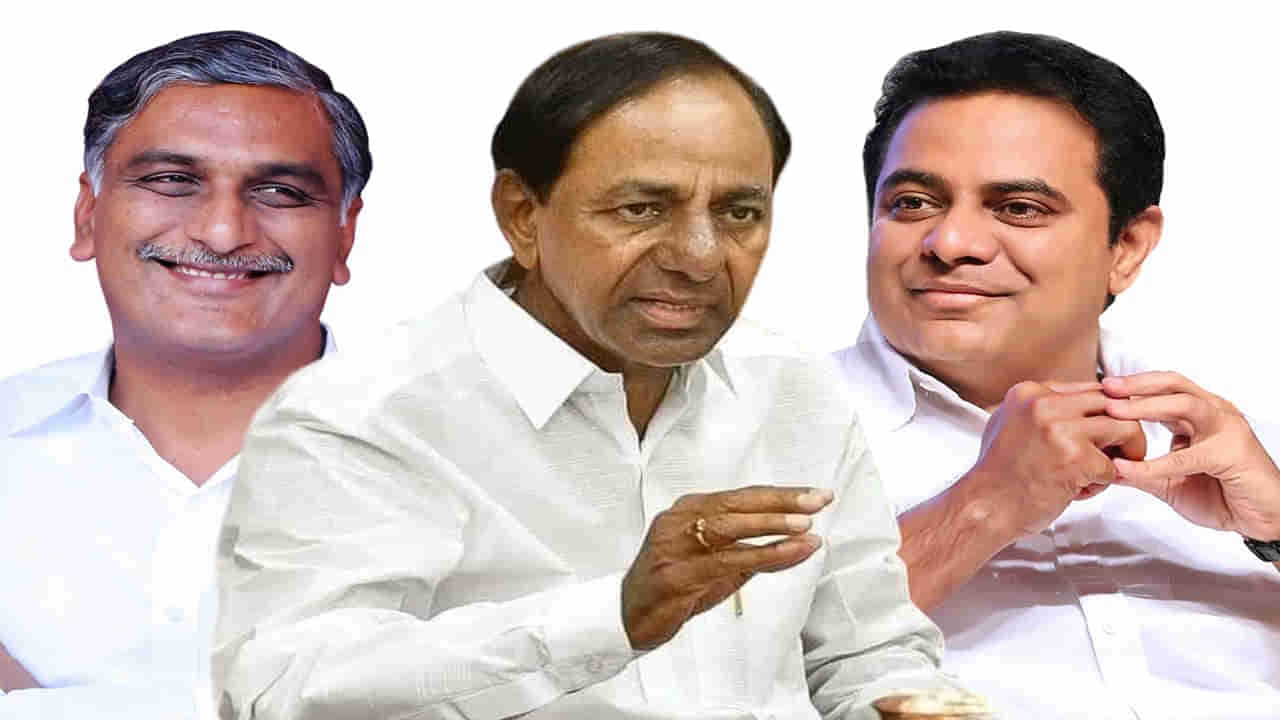
Talk of unhealthy rivalry between Harish Rao and KTR inside and outside the party is also harming growth. This is an issue only KCR can resolve. Even N.T. Rama Rao clearly demarcated roles between his sons-in-law to prevent party damage. KCR too must take a clear decision.
Though Harish Rao was given responsibilities ahead of the silver jubilee celebrations, things changed midway. After Kavitha’s exit, there are signs that the leadership is once again recognising Harish Rao’s importance.
Ultimately, for the survival of the party, it is essential that KCR comes out of his shell, sheds fear and doubt, and takes clear, bold decisions.
Dilip Reddy✍🏽
Political Analyst,
Director, People’s Pulse Research Organisation