








The Raja Saab :
By ANR Writing✍🏽
Newsminute24 Rating: ★★¾ (2.75/5)
The announcement of The Raja Saab instantly raised eyebrows in the film industry. Prabhas, a pan-India star with a towering, action-oriented image, teaming up with director Maruthi best known for breezy entertainers was unexpected. The surprise deepened when the film was positioned as a horror comedy, a genre that hardly seems tailor-made for an actor of Prabhas’s scale and persona.
Naturally, doubts followed. Could a “dinosaur-sized” star image blend with horror comedy? Would the genre suit Prabhas, or would it feel mismatched? The makers attempted to address these concerns by rebranding the film as a “horror fantasy” rather than pure horror. Grand claims such as “the biggest horror fantasy film in the globe,” coupled with the recent box-office success of horror comedies like Stree, helped generate optimism. Confident pre-release statements by Prabhas and Maruthi, along with a reasonably engaging second trailer, further reassured fans. The expectations, thus, were cautiously high.
The key question remains: does The Raja Saab justify that faith?
Story:
Raju (Prabhas) is an orphan raised by his grandmother Gangadevi (Zarina Wahab), who suffers from Alzheimer’s and longs for her estranged husband Kanakaraju (Sanjay Dutt), who abandoned the family years ago. Determined to reunite them, Raju sets out for Hyderabad, where he meets Blessy (Nidhhi Agerwal) and Bhairavi (Malavika Mohanan).
During his search, Raju uncovers disturbing truths about his grandfather. Kanakaraju is said to be living in a mysterious house deep inside the Narasapur forest a place rumoured to inflict strange and frightening experiences on anyone who enters it. Who is Kanakaraju really? Why did he leave? And what is the secret behind the eerie mansion? These questions form the narrative backbone of the film.

Analysis:
On paper, The Raja Saab draws from a familiar fantasy template reminiscent of old Chandamama or Balamitra tales where greed, magic, deception, and eventual retribution drive the plot. A selfish man desires a princess, acquires supernatural powers to seize her and her wealth, and is ultimately confronted by the next generation. Placing a star like Prabhas within such a fantasy-horror setup is, in theory, an interesting idea.
drawback:
Maruthi attempts to move beyond a standard haunted-house narrative by introducing elements like hypnotism and mind games. While the intent is to add novelty, the screenplay becomes cluttered and predictable. Commercial compulsions songs, fights, romance, and mass moments repeatedly interrupt the narrative flow, resulting in a sluggish and uneven experience.
The film opens promisingly with a Satya episode that successfully establishes intrigue around the haunted house. Unfortunately, the momentum dissipates soon after Prabhas’s entry. What follows is a routine commercial screenplay filled with expected beats that fail to engage. The inclusion of three heroines feels forced and unnecessary; none of the characters are properly developed, and their presence only adds to the film’s lag. The romantic tracks neither entertain nor contribute meaningfully to the story.
Comedy, usually Maruthi’s strength, is conspicuously missing. Despite having capable comic actors like Satya, Saptagiri, and Prabhas Sreenu, the humour rarely lands. The horror aspect is equally underwhelming. There is little sense of fear or tension characters behave far too comfortably inside what is meant to be a haunted space, even indulging in romance. As a result, the audience never feels genuinely invested or anxious.
The interval block offers a slight uptick, hinting at a more engaging second half. However, the narrative soon slips back into monotony. It is only in the final stretch particularly from the hospital sequence onwards that the film finds some urgency. The climax, which leans into psychological manipulation and mind games, is comparatively well-handled and provides the film’s best moments. Unfortunately, by then, the prolonged lag has already taken its toll.
Kanakaraju’s character suffers from inconsistent writing. He is initially projected as a brilliant psychological mastermind, but eventually reduced to a greedy man resorting to occult practices. The heavy buildup feels disproportionate to the payoff.
Performances & Technical Aspects:
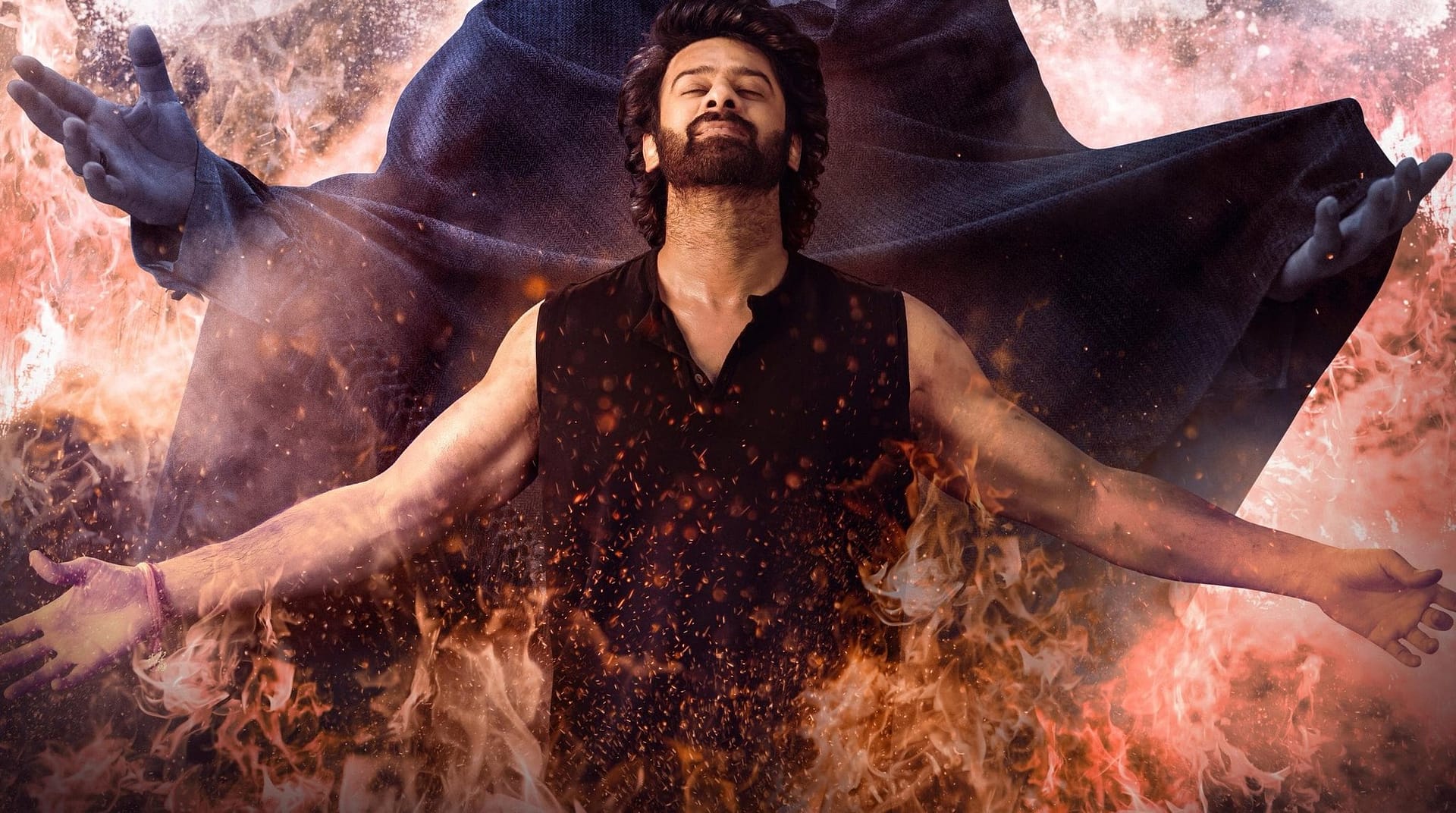
Prabhas appears stylish and colourful, embracing a lighter, more relaxed persona that his fans may appreciate. However, his look and performance feel inconsistent at times, and the use of body doubles is occasionally evident. His dubbing also lacks clarity in parts, though he delivers convincingly in emotional moments, particularly in the hospital scenes.
Among the female leads, Malavika Mohanan gets relatively better screen presence, including an action sequence. Nidhhi Agerwal and the third female character remain underwritten. Sanjay Dutt is underutilised, while Zarina Wahab brings emotional depth and dignity to her role.
The film boasts lavish production values. The palace set is visually impressive, and the scale is evident. The VFX is inconsistent effective in some sequences, noticeably weak in others. Thaman’s music is a major letdown; the songs fail to make an impact, and even the background score feels excessively loud rather than evocative.
Verdict:
The Raja Saab is a film where the idea holds promise, but the execution falters. The attempt to blend fantasy with horror is commendable, yet the absence of genuine scares, effective comedy, and a tightly woven screenplay undermines the experience. Despite a decent climax and strong production values, the film never fully capitalises on Prabhas’s presence or Maruthi’s strengths.
What could have been an engaging fantasy-horror entertainer ultimately settles for mediocrity, leaving behind a sense of missed opportunity.