

Kerala Local Body Elections:
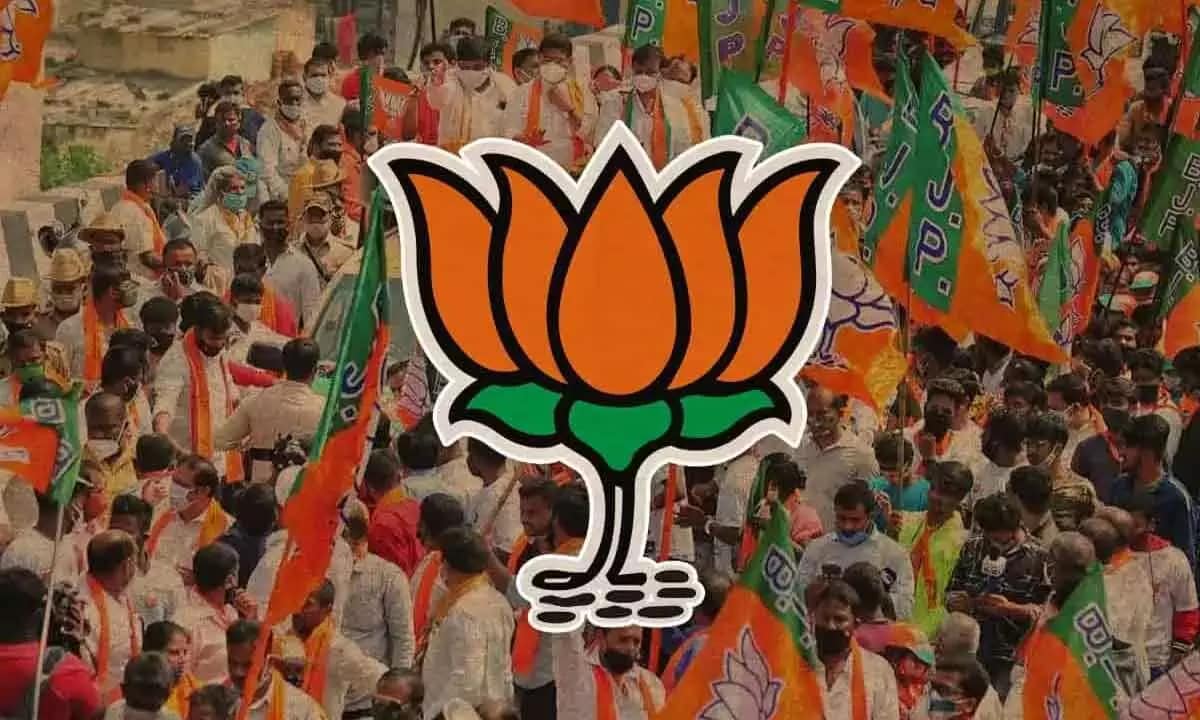
The Bharatiya Janata Party (BJP), which has steadily replaced the Communists in Tripura and significantly weakened them in West Bengal, has now made a notable advance in Kerala the last remaining stronghold of the Left. In the recently concluded Kerala local body elections, the BJP achieved a landmark victory by capturing the Thiruvananthapuram Municipal Corporation.
This result is unprecedented. Until now, the BJP’s presence in the corporation was largely symbolic, usually confined to five to ten wards. This time, however, the party secured a clear majority of corporator seats. More significantly, the Thiruvananthapuram Corporation has been under uninterrupted Left control for nearly four decades. Its transition into BJP hands marks a historic political shift in the state’s capital.
Had this outcome been limited to a single municipal corporation, the state’s two dominant alliances the Left Democratic Front (LDF) and the United Democratic Front (UDF), which traditionally alternate in power might have viewed it as an exception. But the broader picture tells a different story. Across Kerala, BJP candidates put up strong fights in several municipalities. While the party may have finished third in overall ward counts in many places, the margins and patterns of voting defied expectations and unsettled established political calculations.
Both the LDF and UDF are acutely aware of the BJP’s political trajectory elsewhere in the country. Once the party finds a base, it has shown a capacity to expand rapidly and systematically. That awareness explains the palpable unease within Kerala’s traditional political camps following these results.
For years, the BJP has been attempting to gain a foothold in Kerala. Apart from the occasional Assembly seat, the party has struggled to build sustained influence at the grassroots level. This election, however, suggests a qualitative change. The BJP appears to have strengthened itself from the bottom up, focusing on local organisation rather than symbolic victories.
Multiple strategies were tried in the past, including mobilisations around issues such as the Sabarimala controversy, with limited electoral dividends. This time, the emphasis has been on nurturing young cadres, consolidating booth-level structures, and engaging voters consistently at the local level. The results indicate that this approach is beginning to yield tangible returns.
Prime Minister Narendra Modi himself welcomed the outcome, describing it as an encouraging sign of the party’s growing acceptance in Kerala. His reaction underlines the national leadership’s belief that the state is no longer politically impermeable.
Looking ahead to the next Assembly elections, the BJP’s role in Kerala appears set to expand. While it may still be too early to speak of power, the local body results signal a shift in momentum. Kerala’s politics, long defined by a bipolar contest between the Left and the Congress-led alliance, may be entering a new phase one in which the BJP emerges as a decisive and disruptive force rather than a peripheral player.