

World Book Day:
A home is not measured by its size, but by the books it holds. A society is not judged merely by its material progress, but by the depth of knowledge with which it moves forward. These are not sentimental expressions they are timeless truths that form the foundation of a civilized world. World Book Day reminds us of this enduring message: when a book is opened, the mind opens; knowledge shines; the future becomes brighter.
If there is one extraordinary instrument that has carried human civilization forward, it is the book. It has given shape to human thought, preserved experience in words, and passed wisdom from one generation to another. Centuries may change, technology may advance at breathtaking speed, but the place of the book remains irreplaceable. A book is never merely bound paper it is a teacher, a friend, a guide, and often, a silent revolution.
When a person feels alone, a book becomes a companion. In moments of confusion, it offers direction. It shapes an ordinary individual into a refined personality, much like a sculptor transforms stone into art. A good book can change our thoughts; a great book can change the direction of our lives. That is why the saying, “Where books exist, wisdom follows,” remains profoundly true even today.
Every year, April 23 is observed as World Book Day to celebrate the significance of books, encourage reading habits, and honor the invaluable contribution of writers. Books serve as bridges between the past and the future, between generations and cultures. They help us understand the real world while also expanding the boundaries of imagination.

In Indian culture, books have always enjoyed immense respect. Sacred texts such as the Vedas, Upanishads, Ramayana, Mahabharata, and Bhagavatam are not merely spiritual scriptures they are life manuals. They have carried values such as dharma, morality, compassion, and social responsibility across generations. Telugu literature, too, has been enriched by legendary writers from Nannaya, Tikkana, and Yerrapragada to Gurajada Apparao, Sri Sri, Viswanatha Satyanarayana, and C. Narayana Reddy. Their writings awakened society and proved that books are powerful instruments of change.
In today’s digital age, information is abundant. With a smartphone in hand, the world seems available at our fingertips. A single click can provide access to thousands of facts. But there is a fundamental difference between information and wisdom. Social media posts, short videos, and instant entertainment may attract attention, but deep thinking is cultivated only through reading. Books compel us to think, raise meaningful questions, and encourage us to search patiently for answers.
Reading a book with attention improves concentration, strengthens language skills, and develops analytical thinking. It nurtures patience, depth of thought, and the ability to form informed opinions. Especially for students, reading is not just preparation for examinations it is preparation for life itself. Textbooks may help secure employment, but meaningful books help build character.
There is growing concern that the reading habit is declining among the younger generation. Time spent with books is shrinking, while time spent before screens continues to rise. This is not merely a change in habit; it is a shift that affects the very structure of thought. Rapid consumption of information often weakens deep reading, reducing patience, critical thinking, and expressive ability.
Here lies the responsibility of parents, teachers, and governments. Children must be introduced to storybooks from an early age. Every home should nurture at least a small personal library. Schools must revive the spirit of their libraries and encourage students to read beyond the syllabus. Book reviews, literary discussions, reading competitions, and author interactions should become regular cultural practices. Reading itself must become a celebration.
The role of libraries is equally vital. A good library is not just a building filled with books it is a center of intellectual growth. Ideas grow there, not just shelves of printed pages. Modern libraries must reach villages as much as cities. In tune with the digital age, e-libraries, audiobooks, and mobile libraries should become more accessible. Every person with the desire to read must have access to books.
Promoting books in Telugu and other mother tongues is also essential. Knowledge acquired in one’s native language touches the heart more deeply. It strengthens cultural identity, emotional connection, and social awareness. Telugu writers deserve greater encouragement, and more works must emerge on local history, culture, science, and social issues. New writers should be given platforms, and the publishing industry must receive institutional support.
On this World Book Day, each of us must ask ourselves an honest question: How many books did we read in the past year? How many children did we gift books to? If we can devote hours to mobile phones, can we not spare some time for reading? The answers to these questions will shape our collective future.
A book never leaves a person alone. It offers courage in sorrow, clarity in confusion, inspiration in success, and comfort in failure. Even after a person is gone, their thoughts live on through books. That is how great writers defeat time itself. Through books, individuals learn not only to think for themselves, but also to think for society.
Let every citizen resolve to read at least one book a month. Let books become meaningful gifts for birthdays and celebrations. Let children spend less time on screens and more time with stories. Let families discuss what they read and rebuild a culture of reading within homes.
In the end, the truth remains simple.a house is not defined by its walls, but by the books within it. A society is not measured by wealth alone, but by the wisdom with which it progresses. Because where books exist, wisdom lives. Where reading thrives, progress follows. And where knowledge grows, true freedom begins.
By Amaravaji Nagaraju✍🏽
Journalist
Author

dhoni.raju219@gmail.com
Related Posts
journalism: సత్యాన్వేషణలో 37ఏళ్లు…!
Journalism: జర్నలిజం అంటే కేవలం వృత్తి కాదు… అది ఒక బాధ్యత. ప్రజల తరఫున నిజాన్ని వెలికి తీయడం, అధికారాన్ని ప్రశ్నించడం, సమాజానికి దిశా నిర్దేశం చేయడం ఇవన్నీ కలగలిపిన...
Read out all
National: ప్రత్యామ్నాయంతోనే ఏకాభిప్రాయం…!
Delimitation: నియోజకవర్గాల పునర్విభజన, మహిళా రిజర్వేషన్ అమలు – కీలకమైన ఈ రెండు అంశాల్లో ఏకాభిప్రాయం సాధన దేశంలో ఒక సవాల్గా తయారయింది. వీటితో ముడిపడి ఉన్న కొన్ని సున్నితాంశాల్లో...
Read out all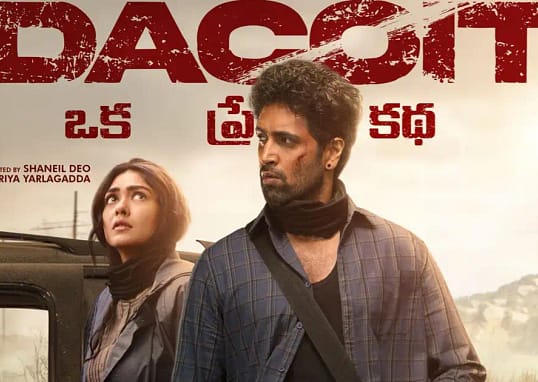
DacoitReview: A Visually Rich Emotional Thriller That Falls Slightly Short of Its Potential
Dacoit Movie Review: Rating: 3.25/5 By Anrwriting/ Film critic Story: Dacoit revolves around Hari Das (Adivi Sesh), a man from a marginalized...
Read out all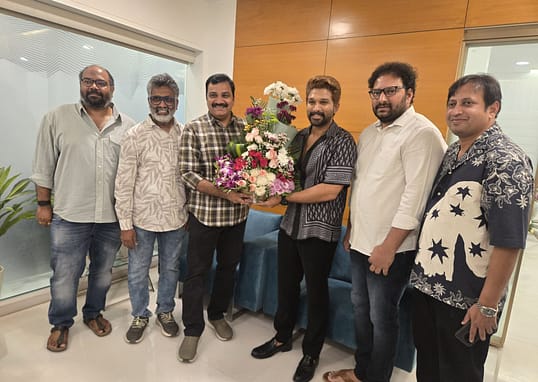
tollywood: ఐకాన్ స్టార్ కి జన్మదిన శుభాకాంక్షలు తెలిపిన TFJA టీం…
Tollywood: హైదరాబాద్లో ఐకాన్ స్టార్ అల్లు అర్జున్ పుట్టినరోజు సందర్భంగా (TFJA) సభ్యులు కలిసి ఆయనకు హృదయపూర్వక జన్మదిన శుభాకాంక్షలు తెలియజేశారు. ఈ సందర్భంగా TFJA ప్రతినిధులు 2026 సంవత్సరానికి...
Read out all
“Biker Review: Style Over Substance in This Racing Drama”
BikerMovie Review: Rating : (2.75/5) By Anrwriting /Film Critic In an era where sports dramas often rely on emotional depth to leave...
Read out all
tollywood: ‘Kathanar’ Trailer Signals a Grand Cinematic Leap
Tollywood: Actor , known for redefining the scope of female-led cinema in India, appears poised to scale new heights with her upcoming...
Read out all